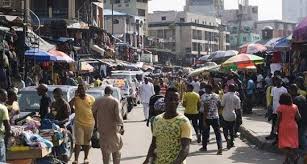
The World Bank has urged Nigeria to ensure that the benefits of its recent economic reforms translate into tangible improvements in citizens’ lives, revealing that about 139 million Nigerians are still living in poverty.
Speaking at the launch of the latest Nigeria Development Update (NDU) report in Abuja on Wednesday, the World Bank Country Director for Nigeria, Mathew Verghis, praised the federal government for undertaking bold macroeconomic reforms, including the removal of petrol subsidy and exchange rate unification. He said these measures have begun to stabilise the economy and lay a stronger foundation for sustainable growth.
“Over the last two years, Nigeria has implemented major reforms around the exchange rate and petrol subsidy. These policies have laid the foundation for transforming the country’s economic trajectory for decades to come,” Verghis noted.
According to him, the impact of these reforms is becoming visible through improved revenue generation, stabilising foreign exchange markets, rising reserves, and a gradual decline in inflation.
“Growth has picked up, revenues have risen, debt indicators are improving, the FX market is stabilising, reserves are rising, and inflation is finally beginning to come down. These are major achievements, and many countries would envy them,” he said.
However, Verghis cautioned that millions of Nigerians are yet to feel the positive effects of these policies.
“Despite these stabilisation gains, many Nigerians are still struggling. In 2025, we estimate that 139 million Nigerians live in poverty. The challenge is clear — to translate reform gains into better living standards for all,” he warned.
The NDU report, titled “From Policy to People: Bringing the Reform Gains Home,” sets out a three-point agenda to sustain progress — reducing inflation, improving the efficiency of public spending, and expanding social safety nets.
Verghis highlighted that tackling food inflation is especially critical to protecting vulnerable households and maintaining public confidence in the reform process.
“Food inflation affects everyone but hits the poor the hardest. It also threatens to undermine political support for reforms. Tight monetary policy is essential, but it must be complemented by structural measures to address supply and market bottlenecks,” he explained.
He also called for improved management of public resources and the strengthening of social protection systems to ease economic hardship and foster inclusive growth.
“These are not abstract ideas — they are practical steps that can turn macro-stability into improved livelihoods,” Verghis said.
He reaffirmed the World Bank’s commitment to supporting Nigeria through policy advice, technical assistance, and financial aid designed to promote sustainable development and shared prosperity.