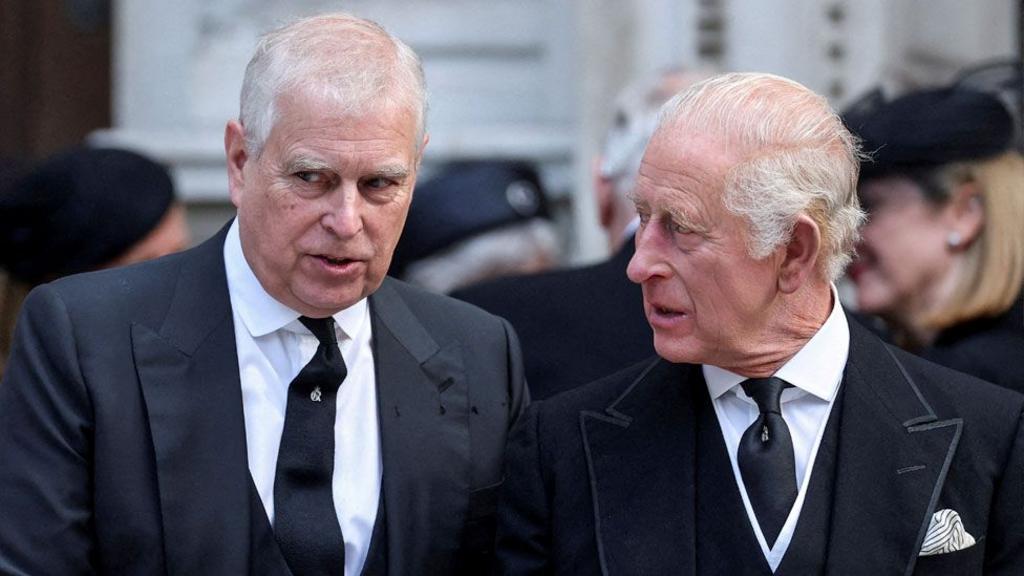
King Charles III’s decision to strip his younger brother, Prince Andrew, of his royal titles and expel him from his Windsor residence has received widespread public and political support, marking one of the most consequential moments in the modern British monarchy.
The move — the first of its kind since 1919 — follows a resurgence of public outrage after renewed allegations linking Andrew to convicted US sex offender Jeffrey Epstein. The king’s actions come in the wake of the posthumous publication of Virginia Giuffre’s memoir, which reiterated claims that she was trafficked to have sex with Andrew on multiple occasions, including twice when she was 17.
“It’s a long time coming,” said Pam Williams, an American teacher living in the UK, speaking outside Buckingham Palace. “Maybe he should have done it earlier — but well done for doing it now.”
The public reaction was swift. Viewers applauded during a live broadcast of the BBC’s Question Time when the announcement broke, while British tabloids splashed headlines such as “Finally!” (Daily Mirror) and “The Andrew Formerly Known as Prince” (The Sun).
Prime Minister Keir Starmer’s spokesperson confirmed that Downing Street had been consulted and “fully supports the decision.”
Despite the move, critics and advocacy groups argue that stripping Andrew of his titles is insufficient. Sky Roberts, the brother of Virginia Giuffre — who died by suicide in April at age 41 — said, “It’s not enough. He needs to be behind bars.”
Republic, an anti-monarchy campaign group, has instructed lawyers to explore the possibility of pursuing a private prosecution. Meanwhile, the Metropolitan Police previously reviewed Giuffre’s allegations but decided not to take further action in 2021.
Andrew, 65, has consistently denied all accusations but paid Giuffre an undisclosed multi-million-dollar settlement in 2022 to resolve her civil lawsuit.
Royal historian Ed Owens described the scandal as the monarchy’s “third most severe crisis” in modern history, following the 1936 abdication of Edward VIII and the aftermath of Princess Diana’s death in 1997.
“This is a genuinely historic moment,” Owens said. “Charles had been out of options for some time. Andrew’s continued presence within the royal family had become completely untenable.”
The controversy deepened after reports emerged that Andrew was living rent-free in a 30-room mansion on the Windsor estate under a 2003 lease agreement — a revelation that has reignited public scrutiny over royal finances and accountability.
Andrew, now officially known as Andrew Mountbatten-Windsor, will reportedly relocate to a smaller lodge on King Charles’s Sandringham estate, a move privately financed by the monarch.
Although stripped of his titles and privileges, Andrew remains eighth in line to the throne — a position that could soon face review amid growing calls for constitutional reform and royal transparency.
Royal commentator Jonathan Dimbleby, a close friend of the king, said Charles likely feels a sense of relief but knows the controversy will persist.
“Andrew has been effectively banished,” Dimbleby noted. “Charles hopes this will draw a line under the scandal — but for Andrew, it’s far from over.”