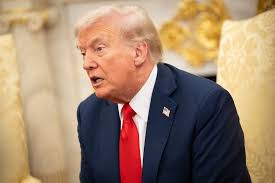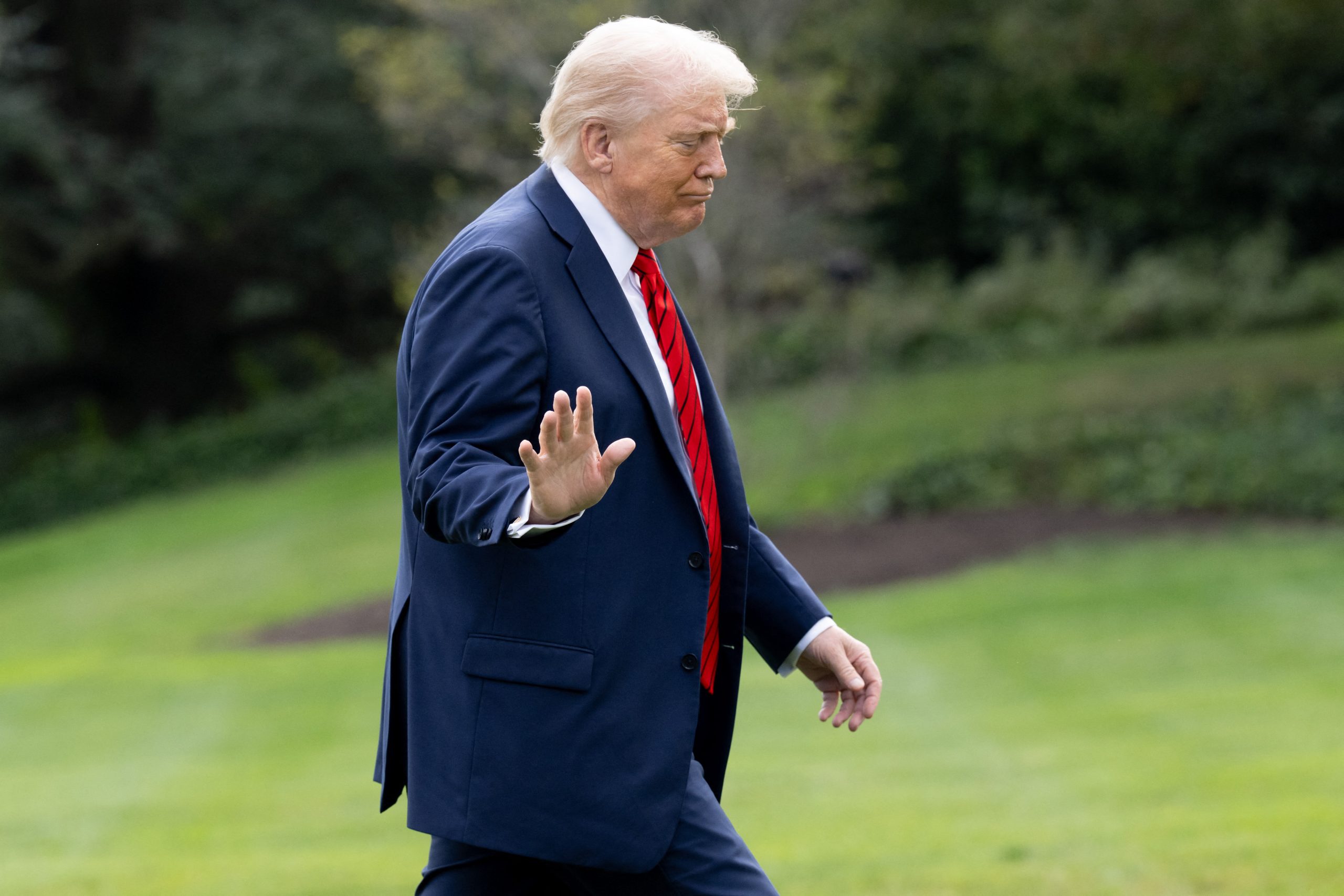
In a move that has reignited global nuclear tensions, US President Donald Trump has ordered the resumption of nuclear weapons testing, drawing swift condemnation from world leaders and peace advocates. The surprise directive, announced Thursday on Trump’s Truth Social platform, has fueled concerns of a new Cold War-era arms race and destabilization of existing non-proliferation agreements.
The announcement came shortly after Russia confirmed testing a nuclear-capable torpedo and cruise missile, escalating fears of renewed superpower rivalry. However, Trump’s statement created widespread confusion, as it remains unclear whether his order involves simulated nuclear trials or live test explosions — the latter of which the United States has not conducted since 1992.
The response from the international community was swift and harsh. Iran condemned Trump’s directive as “regressive and irresponsible,” accusing Washington of hypocrisy.
“A nuclear-armed bully is resuming atomic tests while demonizing Iran’s peaceful program,” said Iranian Foreign Minister Abbas Araghchi in a post on social media.
In Japan, survivors of the Hiroshima and Nagasaki bombings, represented by the group Nihon Hidankyo, issued a letter of protest to the US embassy in Tokyo.
“This order contradicts global efforts toward a peaceful world without nuclear weapons and is utterly unacceptable,” the group said.
United Nations Secretary-General António Guterres urged the US to uphold its commitment to global peace, stating that “nuclear testing can never be permitted under any circumstances.”
Meanwhile, China’s foreign ministry called on Washington to “earnestly abide by the Comprehensive Nuclear-Test-Ban Treaty (CTBT),” which prohibits all forms of atomic test explosions.
Despite widespread condemnation, members of the Trump administration defended the order.
Defense Secretary Pete Hegseth described the move as “a responsible step” toward ensuring America’s nuclear readiness. Vice President JD Vance added that testing was necessary to verify that the US nuclear arsenal “functions properly.”
Still, neither official clarified whether the order involved subcritical simulations or full-scale nuclear detonations.
The Kremlin pushed back on Trump’s justification, denying that its recent weapons demonstrations were nuclear tests.
“These drills cannot be interpreted as nuclear tests,” said Kremlin spokesman Dmitry Peskov, adding that Moscow hoped “information was correctly conveyed to President Trump.”
However, Peskov hinted that Russia could resume live tests if the US proceeds with Trump’s directive — raising fears of an escalating nuclear arms race involving Russia, China, and the United States.
The United States signed the Comprehensive Nuclear-Test-Ban Treaty (CTBT) in 1996, banning all nuclear test explosions. The US has not conducted a live nuclear test since September 1992, when a 20-kiloton underground detonation took place at the Nevada Nuclear Security Site.
Former President George H.W. Bush imposed a moratorium on nuclear testing that has been upheld by every US administration until now. Since then, the US military has relied on subcritical tests and advanced computer simulations to maintain its nuclear arsenal.
According to the Stockholm International Peace Research Institute (SIPRI), the global nuclear stockpile stands at:
- Russia – 4,309 deployed and stored warheads
- United States – 3,700
- China – 600
These figures exclude hundreds of warheads awaiting dismantling.
Analysts warn that Trump’s nuclear testing order could unravel decades of arms control progress, weaken global disarmament frameworks, and trigger new testing programs in rival nations.
While Trump maintains he wants to pursue denuclearization talks with Russia and China, critics argue that restarting nuclear tests could undermine diplomatic trust and destabilize global peace efforts.
“Denuclearization would be a tremendous thing,” Trump said during a summit with Chinese President Xi Jinping in South Korea.
Yet, experts caution that the decision could instead mark the beginning of a dangerous new nuclear arms race—one with global consequences.